Gathering of Yadavaran Oil Field Workers, Protests by Formal workers in Southern Oil and Gas Fields, and Other Oil Industry News
Today, August 25 (Shahrivar 3), contract workers at the Yadavaran oil field staged a protest in front of the Khuzestan governor’s office in Ahvaz. They were protesting against harsh working conditions and exploitative “volume-based” contracts. Their demands include permanent contracts, registration of their names in the SAPNA system, and access to the benefits of employment conversion. Despite 15 years of continuous service, these workers are still bound by temporary contracts and deprived of basic rights such as job security and employment benefits.
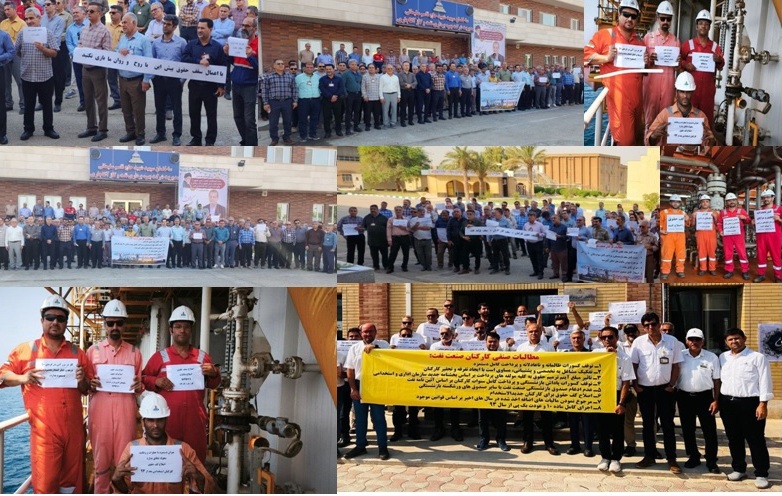
Protests by Formal Oil Workers in Southern Oil and Gas Regions
Today, August 25, Formal employees in the southern oil and gas operational zones once again staged their regular Monday protests to pursue their demands. According to reports, these gatherings took place at several sites, including:
- The 40 offshore platforms of POGC
- South Pars Gas Complex (SPGC)
- Refineries No. 7, 11, and 12
- Pars Oil & Gas Company Assaluyeh (Site 1)
- Pars Oil & Gas Company Kangan (Site 2)
- Aghajari Oil & Gas Production Company
- Assaluyeh Special Economic Zone
- Fajr Jam Gas Refinery
Key demands include: abolition of the salary cap, removal of restrictions on retirement end-of-service benefits, full implementation of Article 10, payment of Article 10 back pay, rejection of the three-tier job classification in operations, and revision of the imposed pension fund bylaws.
Protests by “Third-Party” Workers at Gachsaran Oil & Gas Company
According to reports, today (August 25), third-party contract workers at Gachsaran Oil & Gas Company held a gathering and march to push for their demands, foremost among them the elimination of subcontractors. This protest was sparked by the government’s new draft plan regarding the employment conversion of third-party oil workers, which—while stipulating that wages and benefits be paid directly by the Oil Company—still preserves subcontracting firms. Although this decision was made under pressure from workers’ protests, workers stress that the issue is not merely about the method of payment. Tens of thousands of third-party workers demand the complete removal of exploitative subcontractors from the oil industry. This has become a nationwide demand across the oil sector.
Razi Petrochemical Workers Protests
Today, August 25, workers at Razi Petrochemical in Mahshahr also continued their strike, protesting against management’s unresponsiveness to their demands and its authoritarian practices. The strike has now entered its 18th day. During these protests, two workers—Ahmad Asakareh and Javad Rashidi—have been banned from entering the workplace, and their reinstatement is an urgent demand of the workforce.
Protests in the oil sector are expanding and point toward a nationwide strike movement. Broad solidarity with the struggles of oil workers is essential.